
Understanding PAD: Is Your Leg Pain Peripheral Artery Disease?
Orlando Vascular Surgery Team
If you experience cramping or pain in your legs while walking that disappears when you sit down, you might be tempted to brush it off as part of getting older. However, these symptoms are often the first warning signs of Peripheral Artery Disease (PAD), a common but serious cardiovascular condition that requires professional care.
While our team at Vascular Surgery & Vein Care Center treats venous issues like varicose and spider veins, we believe true vascular health requires understanding both your veins and your arteries.
What Is Peripheral Artery Disease (PAD)?
PAD is a vascular illness that occurs when fatty deposits called plaque narrow or block the arteries in your legs. This process, known as atherosclerosis, restricts the flow of oxygen-rich blood to your extremities.
Unlike Venous Insufficiency, where the veins fail to return blood to the heart, PAD is an input problem: your muscles simply aren't getting the oxygen they need to function properly during activity.
Common Symptoms of PAD
PAD can be subtle, and many people experience no symptoms in the early stages. However, as the blockage grows, you may notice:
- Claudication: Pain, tension, or cramping in the hips, thighs, or calves during walking or exercise that subsides with rest.
- Temperature changes: One foot or leg feeling significantly colder than the other.
- Skin and nail changes: Shiny skin on the legs, loss of leg hair, or slow-growing toenails.
- Non-healing wounds: Sores or ulcers on the toes or feet that heal slowly.
- Numbness: A feeling of weakness or heaviness in the legs.
Artery vs. Vein: What’s the Difference?
It is easy to confuse the two because both cause leg pain, but they are very different conditions:
- Vein issues (CVI): Typically cause swelling, heaviness, and visible bulging veins. Pain often improves with walking and worsens with standing still.
- Artery issues (PAD): Typically cause sharp cramping or choking sensations in the muscle. The pain worsens with walking and improves with rest.
Risk Factors for Peripheral Vascular Disease
Because PAD is a form of cardiovascular disease, it shares many risk factors with heart disease and stroke. You may be at a higher risk if you:
- Smoke (this is the single greatest risk factor).
- Have diabetes or high blood pressure.
- Have high cholesterol or triglycerides.
- Are over the age of 50.
How We Help: Expert Screening and Diagnosis
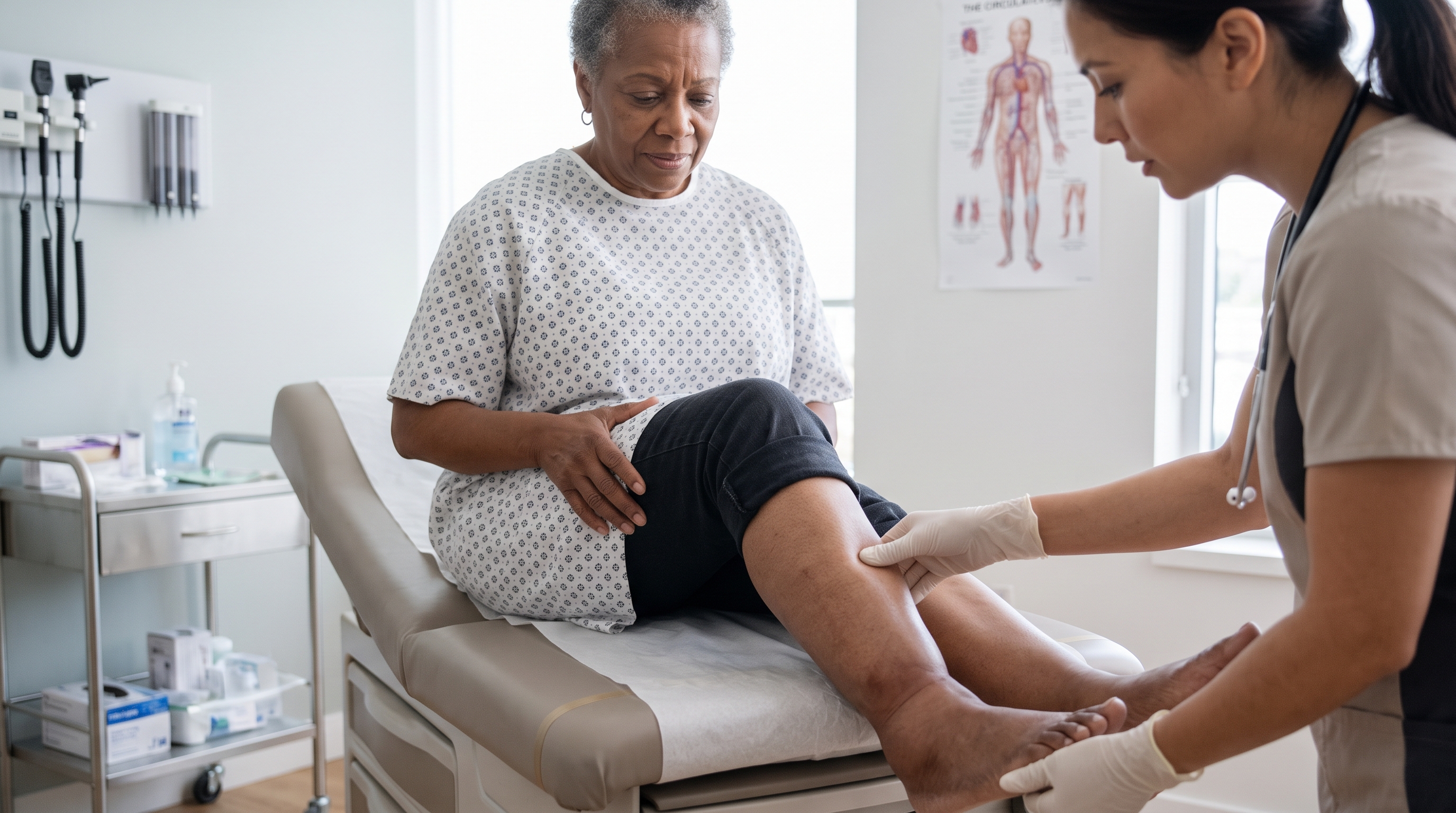
At Vascular Surgery & Vein Care Center, we provide clarity. Because leg pain symptoms for PAD and Venous Insufficiency overlap, an accurate diagnosis is vital. We provide:
- Comprehensive vascular screenings: We use non-invasive ultrasound and ABI testing to assess arterial health.
- Conservative management: Guiding patients through lifestyle changes, walking programs, and compression therapy.
- Specialist coordination: If our screenings detect significant arterial blockage, we act as your advocate and coordinate your care with the region’s top interventional vascular surgeons to ensure you get the specialized treatment you need.
Frequently Asked Questions (FAQ)
Can PAD be cured?
While atherosclerosis cannot be completely reversed, PAD is highly manageable. With the right combination of lifestyle changes and medical treatment, you can stop disease progression and significantly reduce symptoms.
Is PAD life-threatening?
If left untreated, PAD increases the risk of serious complications, including non-healing wounds that can lead to amputation, as well as a higher risk of heart attack and stroke. Early detection is key to a healthy outcome.
Does walking help or hurt PAD?
While walking may cause temporary discomfort (claudication), it's one of the best treatments for PAD. Regular walking helps your body develop "collateral circulation"—small vessels that can bypass the main blockages.
Why does my leg pain stop when I sit down?
This is a classic sign of PAD. When you walk, your muscles require more oxygen. Because narrowed arteries can't keep up with the demand. When you rest, the oxygen demand drops, and the pain subsides.
Assess Your Vascular Health Today
Our vascular expertise lets us look beyond the surface. At Vascular Surgery & Vein Care Center, we're committed to ensuring your entire circulatory system, including your arteries, functions safely.
Have questions about your vein health?
Our Orlando care team is here to help. Schedule an evaluation to find out what’s going on and what your options are.